Reimagining Education
Weekly Reflection # 1
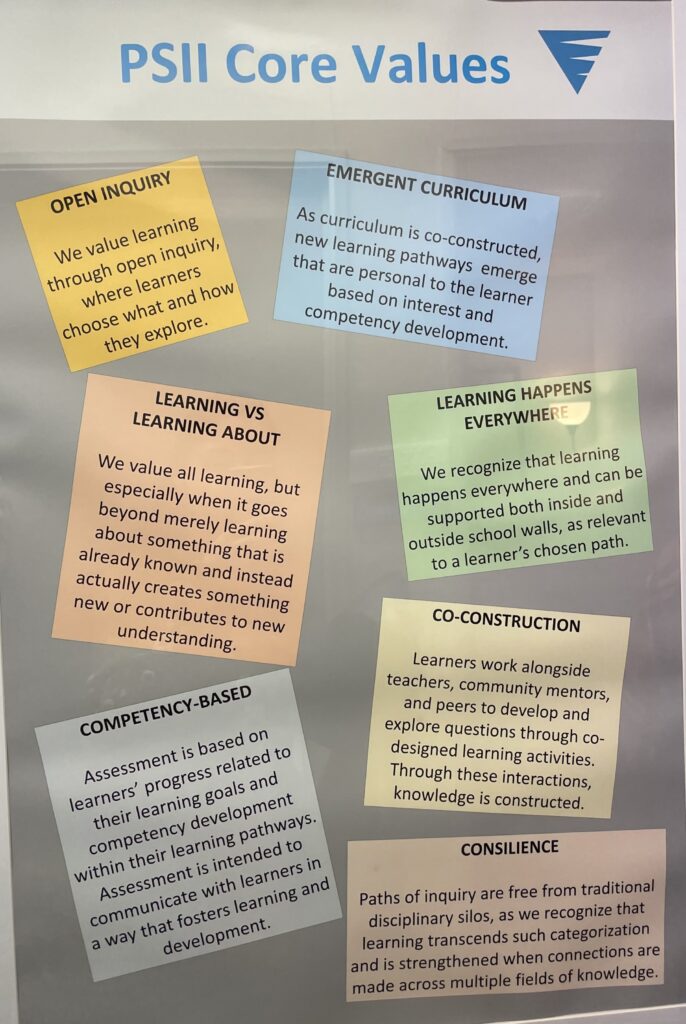
After visiting Pacific School of Innovation and Inquiry (PSII), I felt inspired, excited and slightly anxious. Throughout our classes, we have spent significant time examining how many students do not fit within the standard education system. While BC’s education system is often viewed as progressive, it remains deeply rooted in traditional Eurocentric frameworks that prioritize values which do not always align with the needs of learners. Visiting PSII was an incredible opportunity to see the inner workings of a school that places learners at the center of education. It also led me to consider the barriers of bringing learning such as this into the public school system.
Education is a field that is constantly evolving as new perspectives, research, and technologies emerge. There is also an increased body of knowledge that supports more inclusive teaching practices. I believe it is important to reimagine education in ways that better meet learners needs. As technology and society continue to change, it is important for students to be active participants in their learning journeys, to learn based on their interests, and developing skills such as critical thinking, creativity, digital literacy, and adaptability, as well as respect and reciprocity with the natural world.
As we toured PSII, I couldn’t help but reflect on the challenges that may arise when implementing inquiry-based learning in a public elementary school setting. Funding, support and classroom size come to mind as some of the biggest barriers. Inquiry-based learning requires smaller class sizes and access to materials and technology needed for students to succeed in pursuing their own questions and projects. As I walked around PSII I could help but feel in awe of the spaces such as music rooms and art studios where only a few students had an entire room to learn on their own. Educators also face pressure to cover all the standard curriculum, and restructuring learning in ways that may leave certain topics to be addressed differently could lead to resistance. However, with experience and thoughtful implementation I believe it would be possible to slowly bring the values and structures of pedagogies such as inquiry-based learning into the classroom in ways that feel manageable and allow students, administrators, and parents to develop a shared understanding of the benefits. PSII has wonderful online resources for educators that allow you to take their philosophy and resources and bring it into your own classroom which is such a wonderful way for educators to share knowledge.
Overall, I feel it is an exciting time to think about the type of pedagogy we want to bring into our teaching practice. I am very inspired by PSII and other alternative education models, such as nature-based programs, that prioritize the child and create space for learners to explore how they learn best.
Alix, a great reflection! Yes, Eurocentric and I would say “bureaucratic-centric”, does create “the barriers of bringing learning such as this into the public school system”. The BC curriculum emphasizes inclusive education, but constrains this through a content-focused traditional curriculum. However, I fully agree with your statement: “Funding, support and classroom size come to mind as some of the biggest barriers.”
Hang onto your belief:
“I believe it would be possible to slowly bring the values and structures of pedagogies such as inquiry-based learning into the classroom in ways that feel manageable and allow students, administrators, and parents to develop a shared understanding of the benefits.”